Masha and the Bear: My Friends
- 4.1
- Rating
- 50.00M
- Installs
- Free
- Price

 Analysis by App-foxy
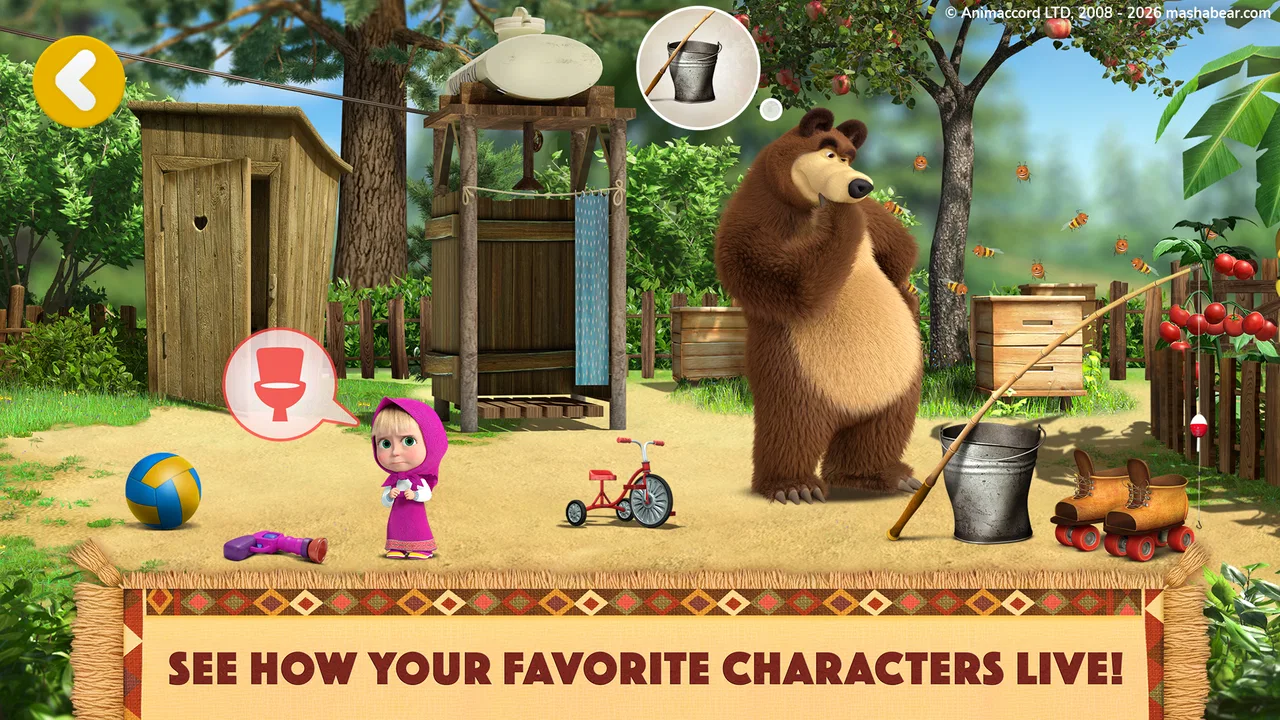
Masha and the Bear: My Friends is the kind of role-playing game I would put in front of a child who enjoys caring for characters more than chasing difficult challenges. It presents a gentle virtual-pet experience built around the familiar Masha and the Bear world, and its main appeal is easy to understand: look after a digital friend, spend time with the characters, and turn short play sessions into a small daily routine.
I approached it as a parent-friendly game rather than as a full adventure or a competitive role-playing title. That distinction matters. The game is free to download, aimed at Everyone, and made by DEVGAME KIDS games, but “free” does not mean every part of the experience is necessarily free of purchase prompts. I found it more suitable for supervised family play at first, especially when a child is old enough to understand that an optional purchase is different from an in-game reward.
What the game feels like in everyday use
The best way to understand this release is to imagine a child coming back to it for a few minutes at a time. Instead of demanding a long session, a virtual-pet game encourages a simple loop: open the app, check on the character, interact with the available activities, and leave when the child feels finished. That makes it a natural fit for a quiet moment after school or a short activity before a longer offline routine.
You May Also Like

 AccuWeather: Weather Radar
AccuWeather Review: A Quick, Clear Forecast for Everyday Decisions
For everyday plans, the best forecast is the one you can understand quickly. AccuWeather makes rain timing, radar, and local conditions easy to act on, with a few trade-offs.

 Hill Climb Racing
Why Hill Climb Racing Still Turns Crashes Into One More Run
A tiny car, a bumpy hill and one more upgrade: Hill Climb Racing keeps resurfacing because its simple chaos makes every near-miss feel personal.

 AliExpress - Shopping App
AliExpress Makes Global Shopping Feel Personal, but Shoppers Bear the Risk
AliExpress turns a global marketplace into a pocket-sized discovery engine. Its reach is useful, its shopping loop compelling, and its trade-offs easy to miss.

 Lords Mobile: Kingdom Wars
Lords Mobile Is a Kingdom-Building Routine, Not a Quick Match
A case-by-case verdict on the building, battles, device demands, and social commitments that make Lords Mobile rewarding for some players and exhausting for others.

 PDF Scanner app - TapScanner
TapScanner Makes Paperwork Easier to Capture, Check, and Share
TapScanner makes scanning with a phone feel less like a rescue operation and more like a dependable step in getting work done. Its capture tools are useful, though not flawless.

 Block Blast!
 Shows How Much a Puzzle Game Can Leave Out
A quiet grid game shows why puzzle players increasingly value instant clarity, repeatable skill and low-pressure play—and where the genre still needs to catch up.
More From Our News Desk
View All News


My impression is that the Masha and the Bear theme does much of the emotional work. Children who already recognize the characters have an immediate reason to explore, while younger players may enjoy the colorful, friendly presentation even without knowing the show. The game does not need a complicated story explanation to make its premise understandable. The familiar cast gives the care-based play a clear personality.
At the same time, I would not describe it as a deep role-playing game in the way an older player might expect from a console or mobile RPG. There is no reason to install it for complex character builds, demanding combat, or a large strategic campaign. Its role-playing identity comes from taking responsibility for a virtual companion and participating in a character-centered routine. That is a strength for its audience, but a limitation for anyone seeking a substantial adventure.
Where children and parents may get stuck
The first point of friction is expectation. A child may see the word “game” and expect constant action, while the actual appeal is slower and more repetitive. If the child prefers racing, puzzles, or fast platforming, the care-focused format may feel uneventful after the novelty of the characters wears off. I would explain the game as a digital pet activity before handing over the device, rather than presenting it as a broad adventure.
Another common stumbling point is the difference between tapping everywhere and following the game’s intended rhythm. Young players often repeat the same action when they do not immediately understand what the screen is asking them to do. Sitting together for the first session helps because a parent can show that the game is about observing the character and responding to its needs, not simply pressing every visible object as quickly as possible.
Purchase prompts can also interrupt the flow. The available in-app purchases range from $0.99 to $39.99 per item, which is a meaningful spread for a children’s game. I would not leave a child to make decisions alone, even if the app itself feels harmless. Before play begins, I would agree on a simple family rule: free activities are fine, but anything that opens a payment screen requires an adult.
There is also a practical difference between a child using the game on a shared family phone and using it on a personal tablet. On a shared device, the child may accidentally change the current session, close the game, or hand the phone back before understanding what happened. That is not necessarily a defect in the game, but it affects how smooth the experience feels. A short introduction removes much of that confusion.
Setup checks that prevent avoidable frustration
Before installing, I would check the device software. The game requires Android 7.0 or later, so an older Android phone may be the reason installation fails or the app is unavailable. This is one of the first checks worth making because repeated attempts to download an incompatible app can look like a store or network problem when the real issue is the operating system.
I would also make sure there is enough free storage and that the device has a stable connection during installation. These are ordinary checks, but they matter more with children because an interrupted setup quickly becomes “the game does not work” in their eyes. If the download pauses, I would first return to the connection and available storage rather than repeatedly tapping the install control.
Once installed, I would open the game myself before giving the device to a child. This is not about inspecting every detail; it is about learning the opening flow, noticing where a purchase prompt may appear, and confirming that the controls make sense on that particular screen size. A two-minute adult preview can prevent a much longer explanation later.
I would keep the device’s normal system controls available instead of changing several settings at once. If sound is missing, for example, I would check the phone’s media volume and silent mode before assuming the game has a fault. If the screen orientation or touch response feels unusual, I would close other demanding apps and reopen this one. Simple, reversible checks are better than making broad changes that create new problems.
For families sharing one device, it is helpful to begin with a clear handoff routine. I would ask the child to finish the current activity, return to a familiar screen, and then pass the phone back. This creates a small boundary around play and reduces the chance that the next person opens the app in the middle of an unclear action.
Recovering a session when something goes wrong
When the game stops responding, my first step would be to wait briefly rather than tapping repeatedly. Multiple taps can make it harder to tell whether the app is delayed or whether the child has opened several controls in succession. If nothing changes, I would leave the app and open it again. That basic restart is often the safest first recovery step because it does not involve changing the device or deleting anything.
If the problem returns, I would restart the device and check whether other apps are also behaving slowly. This comparison is useful: if the entire phone is sluggish, the game may simply be affected by the wider device state. Closing unused apps and trying again is a reasonable next step, while repeatedly reinstalling should be saved for situations where simpler checks have not helped.
I would be cautious about deleting the app as a first reaction. With a virtual-pet game, a child may feel attached to the current experience, and removing the app can create unnecessary worry about losing progress or having to begin again. Unless the family is comfortable with that possibility, I would try closing, reopening, and restarting first.
A useful recovery habit is to describe the problem precisely. “It is broken” is difficult to act on, but “the screen opened and then stopped responding” or “the game closes when I start it” gives an adult a clearer path. I would note whether the issue happens every time or only once, whether the device is online, and whether another app has the same problem. Those observations help separate a temporary glitch from a compatibility or device issue.
If a child becomes upset after an interruption, I would avoid promising that a particular action will restore everything exactly as before. It is better to say that you will try the safe checks first and then decide what to do. That keeps the troubleshooting honest and prevents the technical problem from becoming a larger emotional event.
When the app may not be the cause
Not every disappointing session points to a flaw in the game. A tired child may lose interest quickly, especially with a slower care routine. A busy environment can make short interactions feel confusing. Even the best-designed children’s game can seem unresponsive when the player is distracted or when several people are giving instructions at once.
The device itself is another variable. A nearly full phone, aggressive battery-saving behavior, an outdated operating system, or background slowdowns can affect how an app opens and responds. I would test the game after closing unrelated apps and compare it with another simple app. That does not prove the game is perfect, but it gives a more useful picture than judging it from one difficult moment.
Sound problems are especially easy to misread. The device may be muted, the media volume may be low, or headphones may still be connected. I would check those possibilities before concluding that the game has no audio. The same principle applies to network-related interruptions: if other online activities are struggling, changing the game repeatedly is unlikely to solve the underlying connection problem.
There is also the question of age and expectations. The Everyone rating makes the game broadly accessible, but it does not mean every child will find it equally engaging. A younger child may need help understanding the routine, while an older child may want more challenge and independence. The rating describes suitability, not a guarantee that the gameplay will match every attention span.
How it compares with other choices
Compared with a traditional virtual-pet app, this game has a clear advantage for children who already like Masha and the Bear. The recognizable characters can make routine care feel more personal than looking after an unfamiliar creature. That familiarity may also make it easier for a parent to start a conversation about gentle responsibility and regular check-ins.
Compared with a story-driven role-playing game, however, the experience is likely to feel lighter and more contained. A story RPG is the better choice for a child who wants exploration, progression through a larger world, or a stronger sense of adventure. I would choose this game instead when the goal is a calm character interaction that can be stopped without needing to remember a complicated plot.
It also differs from open-ended creative games. Building or drawing apps can give children more control over what they make, while a virtual-pet format gives them a defined relationship and routine. That structure is useful for a child who benefits from clear goals, but it may feel restrictive to a player who wants to invent everything independently.
The most important trade-off is repetition versus accessibility. The simple format is easier to understand than a complex RPG, yet that same simplicity can reduce long-term appeal for children who need constant novelty. I would treat it as one option in a balanced collection of games, not as the only activity on a device.
Who will enjoy it most
I think the strongest audience is children who enjoy familiar characters, gentle interaction, and short sessions. It can work well for a child who likes pretending to care for a pet but is not ready for the responsibility of a real animal. It may also suit siblings who want to take turns, provided an adult sets a clear boundary around shared-device use and purchases.
It is a reasonable choice for families looking for a free starting point in the role-playing category. The game has reached over 50 million installs and holds a 4.2 average from around 45 thousand ratings, so it is clearly not an obscure experiment. Those figures do not replace personal testing, but they suggest that the basic concept has connected with a broad audience.
I would skip it for a child who becomes frustrated by repetition, expects competitive multiplayer, or wants a demanding challenge. I would also look elsewhere if the family wants a game that can be handed over without any adult conversation about optional purchases. The child-friendly presentation lowers the barrier to entry, but it does not remove the need for sensible supervision.
What to know about the current release
The current version is 1.1.7, and the game was released on September 27, 2022. I mention those details because they help identify the app when a family is checking whether the installed copy is current. If the experience behaves differently after an update, I would first close and reopen it, then check the device and connection before assuming that a familiar action has disappeared.
The developer, DEVGAME KIDS games, focuses on children’s entertainment, which fits the tone and presentation here. Still, a child-oriented developer does not mean parents can ignore basic device habits. I would keep purchase controls under adult supervision, review the game personally, and decide whether the pace suits the individual child rather than relying only on the name or age label.
Because the game is free, it is easy to try without committing money at the start. I would use that advantage properly: install it, play through the opening with the child, and watch whether the child enjoys returning to the care routine. If the interest fades quickly, there is no reason to force the game simply because the characters are familiar.
My practical verdict
I see Masha and the Bear: My Friends as a pleasant, accessible virtual-pet game rather than a deep role-playing adventure. Its strongest qualities are the recognizable characters, approachable routine, and suitability for brief family-friendly sessions. The main weaknesses are the possibility of repetition, the need for adult guidance around purchases, and the fact that setup or device problems can easily be mistaken for gameplay problems.
My practical recommendation is to preview it yourself, confirm that the device meets the Android requirement, and establish the purchase rule before a child starts playing. If the first session goes smoothly, let the child lead while you remain available for questions. If the app freezes or behaves oddly, begin with closing and reopening it, then check the device rather than immediately deleting the game.
For the right child, this is a friendly way to turn a few spare minutes into character-focused play. For a child seeking action, discovery, or complex progression, another role-playing game will be a better match. I would recommend trying it when the Masha and the Bear connection matters and the family wants a simple digital companion, with the understanding that its charm depends on routine more than depth.
FAQs for Masha and the Bear: My Friends
01What is the main gameplay of Masha and the Bear: My Friends?
Masha and the Bear: My Friends is an interactive game designed for children, featuring beloved characters from the popular animated series. Players engage in various mini-games and activities that encourage creativity, problem-solving, and fun learning experiences. The game is designed to be both educational and entertaining, making it a perfect choice for young audiences.
02Is Masha and the Bear: My Friends suitable for all age groups?
While Masha and the Bear: My Friends is primarily targeted towards children aged 3 to 8, its engaging content can be enjoyed by older kids as well. The game’s simple interface and child-friendly activities make it accessible and enjoyable for younger players, providing both entertainment and educational value.
03Are there in-app purchases or ads in Masha and the Bear: My Friends?
Yes, Masha and the Bear: My Friends does include in-app purchases and ads. These features allow players to unlock additional content and features. Parents should be aware of these options to manage spending and ensure a safe gaming experience for their children by adjusting settings or using parental controls.
04What platforms support Masha and the Bear: My Friends?
Masha and the Bear: My Friends is available for both Android and iOS platforms. This ensures that the game can be easily downloaded and played on a wide range of devices, including smartphones and tablets, providing flexibility for users regardless of their preferred operating system.
05Does Masha and the Bear: My Friends require an internet connection?
Masha and the Bear: My Friends can be played offline, which is great for travel or situations where internet access is limited. However, some features, such as content updates and certain interactive elements, may require an internet connection to function properly or to be accessed.
Pros
- Engaging for young children with vibrant graphics.
- Simple interface suitable for toddlers.
- Variety of mini-games keeps interest alive.
- Educational content subtly integrated.
- Offline play available
- no constant Wi-Fi needed.
Cons
- Limited content in free version.
- In-app purchases can be frequent.
- Some ads may interrupt gameplay.
- Requires regular updates for new content.
- May not engage older children for long.

Masha and the Bear: My Friends
Gallery